If you follow/visit this blog at all, you've probably noticed regular posts are in short supply. Truth be told, I've been focused much more on creative endeavors and other social media outlets and that's led to this blog getting a bit...oh, dusty.
But good news! If you like what you see here and you want to see it more often, here's what you should do: find me on the other usual channels, like:
Facebook: Breakwater Industries!
Tumblr: onthebreakwater!
Twitter: wordslinger90!
You'll get everything you like about this blog, and more! See you there!
Wednesday, June 18, 2014


Wednesday, January 8, 2014
"Beautiful things don't demand our attention."

The Secret Life of
Walter Mitty is a movie that has flown under the radar thus far in its
release, and probably will continue to do so. That’s a real shame, because in
this madcap season of Oscar contenders and “emotional” movies, Ben Stiller’s
latest really belongs at the top.
Walter Mitty is
something special, and there are many reasons for that – but it may not seem
like much of anything at first glance. After all, it’s just the story of a guy
who’s worked at LIFE Magazine for sixteen years in the “negative processing”
department. On the eve of LIFE’s last print issue, Walter receives a set of
negatives from one of the best freelance photographers around, with explicit
instructions that Negative #25 is destined for the cover. Trouble is, Negative
#25 isn’t in the package, and if Walter doesn’t find it, he’ll lose his job. This setup would have us believe that the
film is going to be yet another story of the Everyman rising to the top,
discovering hidden potential, getting the girl, and all that. But if we did
believe that…we’d be wrong. And therein lies the real beauty of this story.
Walter Mitty himself is the shining heart of this whole
endeavor. He is, in many ways, the “Everyman” we expect, at least on the
surface. Mild-mannered, quiet, not quick with a comeback. He’s simply ordinary,
at least on the outside. But on the inside…on the inside, Walter is a man who
may have grown up, but never left his childhood imagination behind. He tends to
do what those close to him call “zoning out” more often than most people
consider to be socially acceptable. As viewers, we’re taken along for the ride
on Walter’s “zone-outs”, and are thereby shown the value of them.

On the inside, Walter imagines himself the hero – saving a
puppy from a burning building, making that snappy comeback to his nasty new
boss, getting the girl. In reality, though, he’s doing things like missing his
train to work and chatting with Patton Oswalt’s endearing eHarmony rep. What’s so crucial (and unique) about these
scenes is the manner in which they are presented. These are not flights of
fancy, played for laughs. They don’t distance us from Walter. Instead, they
teach us about his strength, make us identify with and understand him. Walter
is no caricature. He’s never larger than life, and never reduced to less than
what he really is. He’s painfully true. That simple fact earns this film more
respect and love in my book than any in recent memory.
See, we live in an age when it is “cool” to see quirky
characters. It’s supposed to be funny and neat when someone like Walter makes a
lame comeback or struggles socially or something, because we’re being
conditioned to believe that going through situations like that in everyday life
just means we’d make a cool character in a YA book someday. Problem is, for
most of us who are like Walter, that’s just not true. Perhaps the greatest
value of Walter Mitty is in its
ability to recognize that fact and honor it. The struggles Walter goes through,
those daily moments that just don’t turn out the way they would in movies, are
real, and the film never pretends otherwise. Nor does it make Walter into an
escapist loser who only ever accomplishes something in his own mind.

The film honors and values the reality of its main character,
and all of us like him, through and through. Many movies with characters like
Walter surreptitiously teach us to value those characters only inasmuch as they
have an ability to change. We’re taught that the Everyman/Everywoman only has
true value, and is only really a hero(ine), once they have completed the Hero’s
Journey. Having conquered their formerly meek selves and become for all intents
and purposes someone else – only then
do they really matter. We’re taught that we must change, must be completely
extraordinary, and that being as such means leaving ourselves behind. The
beauty of Walter Mitty lies in its
ability to remind us of the strength and intrinsic value we all have to begin
with. We’re reminded that sometimes, the most ordinary people are in and of
themselves extraordinary.
The journey Walter takes is one you should discover for
yourself. Seeing it summed up here would truly only lessen its impact. Suffice
it to say, the story of The Secret Life
of Walter Mitty is one that will take your inner cynical old man with a
shotgun (you know, the one who grouses at kids about his lawn?) and turn him
into a sentimental teenager filled with hope again. That alone is worth the
eight bucks.
Friday, September 20, 2013
Comics Review: John Carpenter's Asylum (Issues 1 and 2)

If nothing else, the Asylum
series is one that has some real potential in its pages. Published by Storm
King Comics and produced by the legendary horror director John Carpenter, the
book tells the story of a world overrun by evil – and the lonely few who are
fighting it.
If that rings a little too familiar to you right off the bat…well,
you’re not wrong. Much of what appears in the first few issues of the story
seems pulled from a checklist of standard supernatural horror tropes: there’s
the rise of a deadly evil on the horizon, a rogue police officer, a quirky
seer, a wise older mentor, a disgraced main character with a tragic backstory –
and they all have to team up to save the world from the apocalypse.
That’s not to say that none of these elements work. Tropes
are tropes for a reason – and with a little inventive twist, they can give
birth to the makings of a good story. That “good story” pokes its head up in
fits and starts throughout these first two issues, and gives some hope for
future installments.
As things get rolling, the basic narrative is pretty simple:
Beckett (the priest) and Duran (the cop) cross paths as Duran follows the trail
of a potential murderer and Beckett battles a case of demonic possession. It
turns out they’re after the same person, just for different reasons. Duran is a
man of facts and logic (coupled with a fiery temper), and Beckett’s mysterious
attitude and spiritual bent means the two men clash immediately. It’s not long
before Duran views Beckett as a suspect in the ongoing investigation of a
serial killer dubbed “The Angel Killer”. There’s interesting potential in the
developing relationship between Beckett and Duran, and the repercussions of
their developing dynamic on those around them, to be sure – but this central
character relationship never really finds its footing consistently in these
first two issues.

Where Asylum falters
most, though, is in its choice to not flesh out the world in which it takes
place. The setting is ostensibly a Los Angeles of the near future, plagued by
waves of demonic activity and crime. From page one, we know that the villain of
the piece is the devil himself. But throughout the first two issues, we as
readers are given little, if any, particular insight into what sort of wider world
the main characters are living in, and what sort of mythology is playing out
around them. Hints are few and far between – but when they do come, they’re enticing.
It’s clear that Beckett, Duran, and the rest are living in a
world that is different from our own. But the questions of just exactly how and
why are left almost entirely untouched, set aside in favor of a chase narrative
that, while decently engaging, feels as though its floating in the ether,
ungrounded in the world where it ostensibly takes place. That, more than
anything, weakens the impact of the overall story.
Still, the story is intriguing, and there’s potential for
development in all the areas of the book that seem slightly lacking so far.
Perhaps the strongest point is the artwork by Leonardo Manco, which has a very
particular aesthetic and actually does a better job giving the reader a feel
for the world of the story than the narrative itself at times. There are some
truly impressive splash pages, and the demonic designs in particular put an
eye-catching spin on the standard portrayal that you might expect.
Unfortunately, even this strength is undercut by the fact
that the story’s female characters are drawn as voluptuous sex objects rather
than actual people, appearing scantily clad or nude for no discernible reason.
Yes, this is a horror comic book – but there’s a line between reasonable and
gratuitous, and for my money this book crosses it needlessly more than once.
Not only is this tendency frustrating, it’s also distracting from a narrative
perspective. Needless violence, brutalization, and gratuitous nudity do not a
good story make.
For a book with the great John Carpenter’s name on it, Asylum falls short in its first two
issues. There’s enough potential in the pages to hold interest, but also some
serious challenges to overcome in order to make this a truly unique and strong
horror comic.
Sunday, July 14, 2013
Today, I went to the movies.
It’s no secret that the last few
days have been incredibly rough for so many people. First the George Zimmerman
trial verdict sparked rage and unrest all over the country, and less than 24
hours later, friends and fans of Glee’s
Cory Monteith woke to the tragic news of his passing. Although I’m far less
directly affected by these events than many people, they’ve certainly been on
my mind. So today, I went to see a movie.
I saw Pacific Rim, and it was
fantastic. Two hours of robots, monsters…and great writing with real heart. Now,
if I were you, sitting and reading this, I might be a little upset by that last
sentence. “Wait,” I would say. “This guy yanked me in with talk about serious
stuff, and now he’s gonna hit me with a sneak movie review. Not cool.” And yet,
not so! Because here’s the thing, friends. The movie theater is a sanctuary to
me, no matter what film I’ve gone there to watch. I’ve written about it before,
here and elsewhere, and I’ll probably write about it again…because god knows
this isn’t the last time we’ll all feel the way we do now.
Anger is hard to deal with. Grief
is even more difficult. But the brilliant thing is, that’s part of the reason
we watch movies. Or TV shows, or read books…to escape. And there’s no shame or
harm in that. Tolkien wrote that “Fantasy is escapist, and that is its glory...If
we value the freedom of mind and soul, if we're partisans of liberty, then it is
our plain duty to escape, and to take as many people with us as we can!”
On days like today, that’s what the
movie theater is for. It’s a way to escape. To sit, even just for a few hours,
and let go of everything that’s weighing us down. In the process, if we’re
lucky, we find something that helps us walk out into the sunlight believing
that we have a chance. That the world can get better.
I realize that sounds about as
corn-fed as you can get, but here’s the thing. When did real good ever come
from anyone who decided that “just OK” was enough? For me, movies aren’t just
an escape. They’re also an inspiration. As a creator, a writer, I walk out of a
film like Pacific Rim inspired to write – and to write better, more true, stories.
As a plain old person, I leave movies like that with a feeling something like
hope for myself and the people around me. I flat-out yearn for theater experiences like
that. They’re the fuel that keeps me going and the respite I need from rough days.
Now, I’ve never really been part of
the Glee fandom myself. But I am part of other fandoms. I follow people on
Twitter and Tumblr who are as invested in Glee as I am in (for example)
Supernatural. And today, I remember the name Kim Manners.
See, back in the years before
Supernatural was a big show, and before I discovered the community of online
fans that I know now, Kim Manners was a consistent director on the show. I
remember seeing the name at the bottom of the screen during episodes, and I remember
that when he passed away, for a while, it felt like a part of the show had died
too. Even offscreen, his presence always mattered. And now, after 8 years of
investment in the show, I cannot imagine how difficult it would be to lose
someone else who is a part of it. My heart really does go out to the fans of
Glee and of Cory himself, as well as his family and friends.
For people like myself, TV and film
aren’t just images on a screen. We live in an age when the internet lets us get
close to others. It tells us just about anything we want to know (and some
stuff we really don’t) about not only our favorite characters, but the actors
who play them. One consequence of this saturation is that, as we’re learning
today, it hurts much more to lose any one of them. But to quote a much greater
writer than myself (John Green), “The truth is it hurts because it’s real. It
hurts because it mattered.” And in the end, that’s a realization to treasure.
We talk about being proud to be
nerds and geeks, that there’s no shame in loving the people and things that we
love. That applies to times like today maybe more than any others. These are
the times when we can all come together and support one another in all sorts of
ways, and there’s a strange sort of joy in that. No one wishes for tragedy –
but when we have to face it, we are pushed to be at our best. And so, when I
was sitting in the theater today, nothing about the movie I watched resonated
with me quite as much as a few simple sentences uttered before the climactic
battle:
“Today there’s not a man or woman
in here that shall stand alone. We have chosen to believe not only in
ourselves, but in each other!”
So when the hard times hit you,
remember. Remember that the theater, the internet, the TV screen, aren’t just
places to escape to alone. They’re also the places we can come together, and
that, more than anything, is what matters.
As always, thanks for reading,
friends.
Wednesday, June 26, 2013
Comic Book Review: Tabatha #1

Tabatha #1 is the first in a four-issue limited series produced by Neil Gibson’s T-Publications. It tells the story of a mailman named Luke and his friends, all of whom just happen to be aspiring thieves. Luke uses the information he gathers from his mail route to help plan the break-ins, but as it turns out, he and his friends find much more than they expected or wanted to during their first night of breaking and entering. This is far from the first story to feature “ordinary people getting more than they bargained for”, and unfortunately it doesn’t have much to offer in the way of an original take on the concept. Worse, the few original elements do more to damage than help the book. Tabatha’s first issue winds up as a disappointing beginning to a still potentially-interesting series.
The foundational trouble with Tabatha is that it feels like a paint-by-numbers book from the
start. Following from the familiarity of the basic logline, the plot
progression and story beats all feel expected and slightly stale, even on a
first reading. It’s not because the developments and story arc are faulty in
and of themselves. Rather, the problem resides in the hollow nature of the
specifics of this story. Plot takes precedence over character, and that makes the
flow of the story feel forced and predictable.

We need to get to know Luke, our main character – and so we
spend the first several pages of the book being put through the paces of his
day. He’s bullied by his colleagues, most of the people on his route are
strange and troublemakers, and the girl he’s crushing on thinks he’s weird.
Despite the fact that it’s pretty standard stuff, it still could have worked.
Except the jokes aren’t funny, the pacing is off, and Luke just isn’t that
interesting of a character. I looked for a way to invest myself in him as a
reader, and I just didn’t find it.
This is also the part of the story where we’re given
heavy-handed, explicit foreshadowing by way of the fact that this job is a
“means to an end” for Luke. Obviously, we’re supposed to ask “what end?” but
the script just doesn’t bother to rely even a little bit on the intelligence of
the audience. Instead, we’re steadily hit with the repetition of the same
foreshadowing that first shows up on page two.
I was hoping things would even out as the story went along,
but that wasn’t the case. When we meet Luke’s friends/roommates (who happen to
be dating each other), we get the expected story beats – the “bickering like a
married couple” exchange, the good-natured third wheel main character, etc. But
there’s no real substance to any of these three major characters, and that
makes the rest of this first issue’s developments (which I’ll avoid spoiling
for those who might want to read the book) far less engaging and interesting
than they should be.

Now, all these things I’m talking about are forgivable, if
not ideal, for a first-issue comic book. Introducing fresh, engaging characters
and plugging them into an interesting plot is not an easy business, and I know
that firsthand. But I re-read Tabatha a
few times in preparation for this review, and each time I did, I found it more
and more problematic.
The story is just average – erring on the side of too much
secrecy and not enough setup for whatever will come with the three remaining
issues. Like I said, forgivable. What’s less forgivable is the supposedly
sympathetic character of Fin (Luke’s best friend and roommate, as well as the
character whose POV we share at the end of this first issue and apparently will
continue to in further issues) and the blatantly sexist elements of his
character. These are overtones which, on repeated readings, appear elsewhere in
the book and betray the fact that the attitudes portrayed are not deliberately
chosen and addressed character traits, but rather systematic issues with the
book as a whole.

What it comes down to is that Tabatha, intentionally or not, has serious problems with
objectifying both female and male characters. I’m not here to make character
judgments of the creative team behind this book. I’m simply reviewing what I
see on the page, and what I see is problematic to me as a reader and a
storyteller.
All of the women characters in this book are drawn in tight
pants, short shorts, and spaghetti straps, and are frustratingly only defined
by their relationships to men. The nameless female crush of Luke (who returns
essentially as a plot device late in the issue) is only important because Luke
has decided that she is “his future wife”. She has minimal dialogue, and we
never even learn her name. Fin’s girlfriend is written as stereotypical and
short-tempered, drawn as skimpily dressed and exceptionally thin, and relegated
to backseat status for most of the story. Fin and Luke aren’t exempt from the
disappointingly stereotypical character machine – Luke is clearly the nerdy,
innocent guy, and Fin is so bulked up that he could give Superman a run for his
body type.
The challenges presented by these characters as written are
the major roadblock to embracing the potential of the overall storyline. We get
an intriguing look at the villain of the piece towards the end of the book, and
enough of the questions left on the last page are enticing enough that I’m at
least mildly curious about what comes next. I just hope new story developments feature
alongside some improvements to the characters and tone of the book as well –
otherwise there’s no way I would shell out to see what happens next.
Wednesday, June 19, 2013
Man of Steel, Or: How the Tin Man Saved the World and Broke My Heart

I saw Man of Steel at its midnight premiere a few days ago.
I’m one of those people who was so excited to see the film that I just couldn’t
wait, so after a full day of work I downed yet another coffee, threw on my
Supes t-shirt, and stayed up until 3AM to see the Blue Boy Scout hit the screen
for the first time since 2006. And since I left the theater, I’ve been sitting
on this review. Turning the film over and over in my head, struggling to let it
settle. It hasn’t. Now, that may sound melodramatic, but I’m not making any
apologies. Because Man of Steel is, through and through, one of the most incredible,
brilliant, frustrating – and in the end, deeply disappointing – films I have
ever seen.
[Fair Warning:
SPOILERS ABOUND BELOW. I usually try to avoid spoilers in my reviews, but I just can’t do this one without discussing very specific, crucial elements of the story, so
consider this your heads-up].
O.K. So, I think we all sort of know the basic drill with
this new Superman movie by now. It’s meant to be an exploration of the hero in the context
of our world today, which is not only exciting but also admirable. Christopher
Nolan, David S. Goyer, and Zack Snyder set out to make a very real superhero movie, and I applaud
that. The writers and filmmakers ask all the right questions. The problem
arises when they are unable to provide the answers to go with them.


If a superhero appeared in our world today, how would people
react? What sort of toll does it take on a person (even a Kryptonian one) to
exist in a world where you are different from everyone else? On an even more
basic level, the real issue at the heart of Man of Steel comes in two parts.
The first is an assertion: you can choose the sort of person that you become.
The second is the question that naturally accompanies that: if you can choose, then how do you choose – and what happens when you do?
So let’s start at the beginning. The first third of
the movie is where it shines the most, surprisingly enough. We spend a great deal of time on the
doomed planet Krypton, something I wasn't expecting but in the end thought was
absolutely fantastic. We get a real dose of science fiction here, a world
without the boundaries of our own. Krypton is on the cusp of collapse, but it’s
not there yet. There are spaceships, machines, and landscapes that will take
your breath away.
But the heart of this first part of the Superman mythos rests
with the emerging conflict between the scientist Jor-El (a superbly engrossing
turn by Russell Crowe) and the military man General Zod (Michael Shannon). We
see the two sides of the world that Kal-El’s Superman is born from, and learn
that he is the first natural birth Krypton has seen in hundreds of years,
setting him up as a unique figure even on his own planet. We’re given some
truly awesome action set pieces, especially as Zod seeks to solve the problem
of Krypton’s potential destruction in his own, military, way. There’s a real
strength and depth of character to this opening portion of Man of Steel.
 |
| Russell Crowe as Jor-El. |
One slightly unconventional but well-utilized element of the
film is its narrative structure, particularly as it relates to the origin story
of Clark Kent. The basic story of a hero like Superman is so entrenched in the
public consciousness that it seems almost tedious to sit through yet another
telling of his “farmboy in Kansas” upbringing. Screenwriter David Goyer, however, chooses to fold
that origin story over on itself, essentially condensing it narratively without
removing any crucial elements. Following the destruction of Krypton, we spend the expected amount of time in the fields of Kansas, but
through flashbacks had by a 20-something Clark as he wanders the world, seeking
the best way to use his powers without revealing his true nature. For my money,
this is one of the best choices the film makes from a structural perspective –
and it continues to express and develop the central question and challenge of a
life like Clark’s.
Another narrative choice that makes this re-framed question abundantly clear in the course of Clark's origin story is the
alteration of the death of Pa Kent (Kevin Costner). Rather than a heart attack,
Clark’s father is felled by a tornado as Clark watches – helpless, because even
with all his powers, he cannot bring himself to disobey the command of his
father to stay put and not reveal his powers to the nearby crowd. This change
is a bold choice, to be sure, and one that not everyone will agree with.
Personally, I found the change itself not only interesting, but also logical as it dovetailed with the main
challenge of the first half of the film, and sought to reinforce the true
nature of that issue. But the writing and execution of the scene itself seemed shoddy, even a bit lazy. Here was the first
point in the film that I felt underwhelmed. I wanted to care more than the
movie allowed me to – and that would be a continuous problem throughout the remainder of the story.
 |
| Amy Adams as Lois Lane. |
It’s not long after this that we’re introduced to Steel’s
iteration of Lois Lane (Amy Adams). She makes a great first impression, and shines
as a very solid, decently-drawn female character – until the film just tries to
damn hard to make her constantly relevant. She goes from an interesting, dogged
reporter to a ham-handed plot device in the course of about 20 minutes, and the
end result is an exceptionally frustrating overuse of the character, as if the
filmmakers were trying to deliberately force the audience to admit that, hey,
these people are using a strong female character! Good for them! In doing so,
they cut themselves off at the knees and turn Lois into little more than an incidental character who somehow manages to rocket around the world fast enough to be present for every major plot development.
 |
| Michael Shannon as the legendary General Zod. |
The arrival of General Zod on earth is a welcome return of the character, and
sets the third act of the film into motion…and this is where the bottom falls
out. During the battles between Superman, Zod, and Faora, Man of Steel reveals
its fatal flaw. To wax allegorical for a moment, it’s as if the movie is a
talented football player, returning a punt kick for a touchdown. He’s outrun
the other team, using his talent and his smarts to get into the open field. At
which point he gets lazy, maybe even starts celebrating a little before he
crosses the goal line. And then he trips, or drops the ball from his uplifted,
celebratory hand. And everybody’s stomachs drop. That’s how I felt watching the
last third of Man of Steel, and as much as it hurts me to say it, the reason was Superman himself.
 |
| Zack Snyder, director and fan of extremely chiseled leading men. |
Don't get me wrong. The battles between Superman and the Kryptonians are
undeniably spectacular. If there’s one thing Zack Snyder knows how to do
as a director, it’s orchestrate an impressive action scene. The problem is,
that appetite for destruction and showmanship clashes with a central tenet of
the movie he’s trying to make. In the latter part of the film, Superman is being
forced to choose between rebirthing the Kryptonian race or saving humanity. He
chooses humanity, as we know he must. But then, behold! He proceeds to battle
Zod in an all-out superhero brawl that decimates first a small Kansas town
(whose only sizeable building is apparently a Sears, in one of the more
annoyingly egregious examples of product placement in the history of ever); and
then the streets of Metropolis itself. The problem? This battle destroys entire
city blocks. Buildings crumble and collapse into the streets. In short, any
thinking person knows, people die. Realistically,
thousands of them. And Superman doesn’t give it a second thought. Not once do
we see him try to steer Zod out of the city, or even stop throwing punches long
enough to rush people to safety. This lack of care or concern for the people
Superman has chosen to call his own is paradoxical, distracting, and at best a
huge oversight on the part of the filmmakers. At worst, it is an unspoken
effort to change the core of this character, and what happens next made me
worry that that is exactly what’s going on.
In the end, Zod and Superman smash and bash their way into
Grand Central Station, which somehow found its way from the New York City of The Avengers to Metropolis. There,
Superman gets Zod in a headlock, but Zod turns the situation into a bizarre Mexican
standoff by training his heat vision on a helpless family. And what happens
next made me curl into my seat, feeling like someone had just gut-punched me.
Superman, the embodiment of truth and justice, the hero I’ve loved since I was
a kid…snapped Zod’s neck.
 |
| Henry Cavill as a Superman for the 21st Century. |
Now look. I’m not a child anymore. I understand what it
means to “reinvent” a character for the big screen – especially with an eye
towards making him relevant in our world today. Nolan, Snyder, and company took
risks with this film. I admire that. But that admiration vanished when Zod’s
body hit the ground. See, there’s a real difference between “updating” a
character and changing them entirely. Here, the filmmakers do the latter.
Superman’s
dedication to the good – to the protection of life, and restraining his immense
powers rather than using them to harm others, is at the heart of what makes the
character. It’s what makes some people dismiss him entirely – the “Big Blue Boy
Scout” moniker isn’t particularly complimentary. But regardless, it’s what
makes Superman truly super. It’s what sets him apart from villains like Zod and
Faora. And here, that difference gets thrown out the window without a second
thought. That, more than anything, is what ruined Man of Steel for me.
 |
| David S. Goyer, screenwriter. |
I could
have stood for Superman killing Zod. In the universe created for the film,
there’s not really another valid choice. No Phantom Zone to send him to, no
anything. But what seals the deal is this: Superman’s remorse for this murder amounts to nothing
more than a manly howl of anger, mitigated by the sudden (and once again, inexplicable)
presence of Lois. We are given no understanding of the code that Superman
has always, in every iteration on page or screen, lived by.
So, in the end, Man of Steel may be a good, even great,
movie. It may even gain the status of one of the best superhero movies of the
year. Fine. That doesn’t make it a good Superman movie. So much is done right,
so much of the setup is perfect. And then it goes so very, very wrong. To me,
Kal-El fails to live up to the lessons taught to him by either of his fathers. This Kryptonian hero, for all his powers and might, is hollow. The most important part of Kal-El, the part that makes him Superman, is his human heart. The real tragedy here is that the filmmakers seem to have forgotten that completely, leaving us with a stunning but ultimately empty spectacle.
Tuesday, June 18, 2013
Resurrection, Man.
Hey guys,
If you were a regular follower of this blog in the past, odds are you probably aren't anymore...and I don't blame you. I wouldn't follow a blog that hasn't updated in almost a year either. See, this last year sort of got away from me. I guess since it was the last year of my undergrad career, you might be able to imagine why.
On top of all the college-related elements in the equation, I'm proud to say that over the last six months, many of the things that I might ordinarily post on this blog have been appearing over on Whatculture.com, a pop culture site that I'm now a contributing writer for. You can find a list of my articles on topics ranging from Doctor Who to Deadpool and beyond here.
But, in the immortal words of Bob Dylan, "The times they are a changin'." There is a light at the end of the empty blog tunnel - and it's the florescent glow of a laptop screen. Basically, I'm back. Back in black, back with a vengeance, etc, etc. As you might have noticed, the Wayward Wordslinger domain has gotten a facelift, and this new look is just the beginning.
From now on, you can expect updates once a week, covering everything from television to movies to books and beyond. There'll be reviews, musings, and everything in between. I'll be kicking things off with a pretty in-depth review of Man of Steel, which will go live tomorrow. Over the next few days, I'll also be tweaking the layout, gadgets, and features of the page, so come on back to check it all out!
As always, thanks for reading!
Friday, August 10, 2012
Public Service Announcement: New Reading Materials
Hail, dear readers!
This is just a quick PSA to anyone who might be looking for some new regular reading material on the interwebs. If this is you, you're in luck!

(Barney Stinson approves.)
My good friend (and often-time co-author) a guy named Jack Holder, has just launched his own blog over at http://radicalcitizenship.blogspot.com/. He'll be publishing his own thoughts, as well as bits of his works in progress (which, if history is to be believed, will only be good after I have edited/completely rewritten them for him).
Just kidding.
Mostly.
Jack's a great guy and an even better writer. It's well worth your time to check out what he's up to over there at (once more, with feeling!) http://radicalcitizenship.blogspot.com/
Don't miss out!
In unrelated news, I've learned how to insert GIFs into my posts. I'm a little behind the times.
Tuesday, July 24, 2012
"Group Hug": Slayage and Community
Last week, I attended the 5th Biennial Slayage Conference on the Whedonverses. The conference is exactly what the title would have you believe - plus so much more. It is a gathering of academics and fans, coming together to celebrate, discuss, and analyze the works of writer/director Joss Whedon. It is also a community that I feel blessed and thrilled to have become a part of.
This year's conference was held at the University of British Columbia in Vancouver, BC, which only added to my desire to attend after a paper proposal I submitted was accepted back in February. I had recently received my first real publication credit as a contributor to Joss Whedon: The Complete Companion, and the fact that my opportunity to attend Slayage grew out of something that amazing to begin with still boggles my mind a little (OK, a lot).
Like any first-time attendee of a conference, I didn't really know what to expect. Not only was this my first ever academic conference - I had also flown literally coast-to-coast for it, I didn't know a single person there, and I was at turns terrified and overwhelmed by pretty much everything around me. Not to mention how nervous I was about having to present a paper in front of who knew how many people. The litany in my head went something like this: You're going to miss a flight and be stuck in Toronto Your presentation is going to go badly You won't be dressed well enough Your paper isn't very good and everyone is going to know it but maybe they'll be too nice to say so Oh and whatever you do, don't keep any apples in your bag when you go through customs because apparently bringing apples to Vancouver is illegal.
True story, folks.
Then the first day of the conference came around, people actually started showing up, and everything I was worried about just kind of...stopped mattering. I was early for registration, and I sat there expecting to see lots of academics with expensive suits and at least a monocle or two in the mix. What I got instead was a crowd of friendly people wearing jeans and t-shirts that celebrated Firefly, Serenity, Buffy, and Doctor Horrible, among others. Everyone was so happy to be there, and it didn't matter if you were at your fifth Slayage or your first - the one thing made abundantly clear by and for all was that you were welcome here.
Over the next four days, a few of my friends from home texted me to see how things were going. I jokingly texted back to them "These are my people, I belong among them." But after thinking about it a bit, I realized just how true that silly phrase turned out to be.
See, I've always been a geek in one way or another. Granted, 21 years isn't all that long to be anything, but still. As terribly hipster as it sounds, I was a film and comic book geek before it was 'cool'. I was in high school when people almost always laughed at geeks and nerds, not with them like they (sometimes) do now thanks to shows like The Big Bang Theory. I'm the kid who read books on the playground and dreamed about wearing a cape like Superman when I grew up (I don't know who I'm kidding - I still do that). Movies like Back To The Future (the greatest movie of all time as far as I'm concerned), Christopher Reeve's Superman, and Star Wars thrill me to the core even when most of the people I know don't really understand why. I have never been embarrassed to call myself a geek or a comics nerd - but man, sometimes it can feel lonely, at least to this small-town kid from rural Maine.
I guess that's why I (and people like me) look to characters like The Doctor from Doctor Who, or Superman, or The Avengers, or any of a hundred thousand others like them out there in the fictional world. They're alone, more often than not, and they choose to rise above and thrive both in spite of and because of this. They're all the inspiration we think we need.
But I'll do you one better. Because if there's one thing this summer has been teaching me, it is that we don't need to look just to fictional characters to find inspiration. We have each other. I only started realizing this earlier this summer, and Slayage was really the defining moment in helping me form an understanding about how true it really is. Over the last few months, I've met new friends and gotten back in touch with old ones, and I found out that they're a lot like me. I'm not the only one who is just as happy spending his day inside watching a movie, reading or scrolling the internet than going outside and do something involving crowds of other people and sunlight.And there's nothing wrong with that. It doesn't mean I'm antisocial and strange. It just means I enjoy different things than other people.
Slayage took things a step further. There I found not only people who love the same shows and things that I do, but who love them enough to take them seriously as creative efforts and truly believe that shows like Buffy, Angel, Firefly, Sherlock, and Supernatural have things to teach us, that they are more than just shiny things to look at for an hour one night a week (or for hours at a time on DVD). Plus we had puppets. Puppets are cool.
At Slayage, I felt like I really belonged entirely, for the first time in a very long time. It wasn't just me and my few friends, lurking in a corner and talking about things that made people who overheard us ask "Are you speaking English?" (Also a true story.)
Most people who know me know that I'm an introvert, and it's often really difficult for me to get up the nerve to get involved in conversations with other people. At Slayage, you couldn't shut me up. I was treated as being among equals (despite my lack of any sort of academic degree), and I never once felt that I was looked down upon or that people were just putting up with me until I went away. I made friends at Slayage, ones I hope to keep for a long time to come. I saw other people express what I already felt for myself - that these movies and shows I grew up on and continue to watch are more than just teenage escapism. They matter, almost as much as the people who watch them matter to each other.
What Slayage did was give me a chance to experience the dynamic I have with my friends at home happening on a much larger scale with a wider range of people, letting the same things bring us all together. For someone like me, belonging is one of the most important feelings in the world, and Slayage gave me that. So to everyone from the conference who might be reading this, thank you. Sincerely. You probably didn't know it at the time, but everything you all did made a huge difference to me - a difference I didn't realize was possible. You all helped me feel a sense of confidence in myself that I wasn't even sure was there. So thank you.
To anyone reading this who hasn't had the chance to experience what I did in Vancouver: go out and find your own version of Slayage. Maybe it's a Magic or Dungeons and Dragons game on Thursday night with some friends. Maybe it's a Doctor Who marathon. Maybe its as simple as going to a crowded theater to watch a movie. Maybe it is one of a hundred other possibilities. All I'm saying is, don't be afraid to find out which one is yours.
Never be ashamed to be where you belong. Embrace it.
Sunday, July 22, 2012
Nolan "Rises"

Fear not, citizens of Gotham. This review is simple, straightforward, and SPOILER-FREE.
So. The Dark Knight Rises. One of the most anticipated movies of not only the summer, but of the year. I had the chance to see a midnight screening, as part of a 3-movie Batman marathon featuring both Begins and Dark Knight, capped off with Rises. This absolutely influenced my feelings on the film, especially since so many elements from Begins arose again in Rises. Seeing Nolan's ducks lined up in a row helps discern the heart of the story he's telling, and how he's been planning to finish telling it since the beginning.
There's an awful lot going on in The Dark Knight Rises. Enough, even, that it seems the story well could have played out successfully over 2 films - or should have been trimmed down a bit to fit comfortably in the confines of a single film. The story overflows with characters new and old, from Bane (Tom Hardy) to Catwoman (Anne Hathaway), as well as Batman staples like Commissioner Gordon (Gary Oldman) and Alfred Pennyworth (Sir Michael Caine). None of them feel shoehorned in just for the sake of having them there, nor do any of them get the shaft in terms of screentime. Much like Marvel's The Avengers, Rises does a great job of balancing a large and complex cast along with its story.
This movie is not perfect. What it is, though, is the culmination of a clear vision on the part of director and writer Christopher Nolan. It may not be what we either expect to see or want to see, but it is unquestionably Nolan's story. This is Nolan's Batman. He's telling his version of the story the way he wants to tell it, and he's doing it well. I have an immense amount of respect for that kind of creative vision and storytelling integrity.
Nolan uses his story to grab hold of you and never lets go, something that's not easy to do in a nearly 3-hour movie. Both the scale and stakes of the movie are bigger this time around, and Nolan handles the necessary shift in storytelling perspective extremely well. I'm looking forward to seeing this film again, hopefully in IMAX, as I'm told the visuals that Nolan puts onscreen are even more spectacular in that format. Here's hoping we get more films of this caliber on our screens soon.
Friday, July 20, 2012
Rise.
By now, most of you know the story.
12 people died last night, and at least another 50 (possibly as many as 70) were hurt. These people were at a midnight screening of The Dark Knight Rises in Colorado when a gunman burst in and opened fire without a word.
There is no adequate way to respond to a tragedy like this one. Words cannot encapsulate the pain and sorrow that the victims families and friends must be feeling right now. I can't pretend to be able to make sense of what happened. All I can do is share my sympathies and prayers with those victimized by this terrible incident.
The knee-jerk reaction to tragedies like this one is to attempt to eradicate any chance of it happening again. To that end, the NYPD has assigned officers to every theater in the 5 Boroughs showing Rises, and AMC Theaters has banned the wearing of costumes and masks in their theaters - both decisions that should be applauded.
But beyond that, rumors have begun to swirl regarding the possibility that Rises might be pulled from theaters. No official word has come down on this yet, but Hollywood.com's Paul Dergarabedian said he would be "shocked if that happened, but it's such an unprecendented situation." I put my money on Rises staying right where it is, in theaters. But that doesn't make the possibility that it might be pulled any more acceptable to me. Here's why.
I went to a Rises midnight screening as well, with my two best friends. Like the people in that theater in Colorado, I went because I was too excited to wait until morning. More importantly, I went because going to the movies (at midnight or not) presents me with an opportunity to be part of a community experience unlike any other. Being in a room full of people who are there to celebrate the awesome power of film and storytelling together is an entirely unique and awesome experience. Having that sense of belonging is an all-too-rare, and thus crucial, opportunity. The movies continue to teach me about storytelling, about friendship and magic and life in general. I wouldn't give them up or ignore what they've taught me for the world. As Christopher Nolan put it in his statement on the tragedy:
"The movie theatre is my home, and the idea that someone would violate that innocent and hopeful place in such an unbearably savage way is devastating to me."
In the days and weeks to come, many people will be looking to place blame for this horrible incident, and without a doubt, some will try to lay that blame at the feet of directors like Christoper Nolan, who directed Rises. When that happens, let's all try to remember what Joss Whedon said about the nature of creative work like Rises or his own The Avengers.
"All worthy work is open to interpretations the author did not intend. Art isn’t your pet, it’s your kid. It grows up and talks back to you." Basically, once it's out there, it's out there, and there's nothing you can do about how people respond to it.
Holding filmmakers and artists like Christopher Nolan and his team accountable for the actions of a man who clearly was deranged accomplishes nothing. Not to mention that in this case, the shooter hadn't even seen the movie, so the point is really moot anyway, no matter what some people might say.
Things like this have happened before, and the miserable truth is that they will probably happen again.
But if films (especially superhero films like Rises and The Avengers) are meant to show us anything, its this:
We can rise above tragedy. We are not helpless or without hope.
So please, don't let what happened in Colorado stop you from seeing a movie with your friends and family this weekend or any other time. If anything, let it encourage you to go even more. On one level, movies are an escape, and we all know it. But in helping us 'escape', the movies also unite us all. Now is not the time to separate ourselves from one another in fear.
It is a time to come together. Maybe even in front of a movie screen.
Sunday, July 8, 2012
"Spider-Man" really is "Amazing" [Spoiler-Free]

I'll admit it: I wasn't all that jazzed for this reboot of the Spider-Man film franchise. I was never a huge Spidey guy to begin with, and after the virtual trainwreck of Sam Raimi's Spider-Man 3 about 5 years ago, I was still experiencing some arachnid fatigue. Until tonight. The Amazing Spider-Man really is "Amazing", and not for the reasons you might expect.
First things first. If, like me, you were hesitant to see this new Spider-Man because of the recent Tobey Maguire/ Sam Raimi trilogy, you can put those reservations to rest right now. Grab them, bundle them up, and toss them out the window - this is a new Spidey story, and when you see it, the last thing you're going to be thinking about is any other iteration of the webslinger onscreen.
Like I said, I've never been a Spider-Man aficionado. I know nothing but the basic "with great power comes great responsibility" deal about the original story arc of Peter Parker in the comic books, so if it's a comparison between page and screen you want, this isn't the place to get it. What I can tell you about is the fantastic story I saw play out on the screen in front of me.

Amazing Spider-Man is a different kind of superhero movie. The approach taken by screenwriters Alvin Sargent, Steve Kloves, and James Vanderbilt produces an incredibly well-crafted, perfectly proportioned origin story that director Marc Webb works wonders with. I wouldn't go so far as to call the film a character study, but I will say that its greatest strength is the heart its characters bring to it.
Andrew Garfield is absolutely spectacular as Peter Parker, and the chemistry he shares with Emma Stone as Gwen Stacy makes their scenes together smolder with the kind of sexual tension you can only find in high school hallways - that reckless attraction you can't ignore, but couldn't define to save your life either. What's also wonderful to see here is that Gwen Stacy is far, far more than just the pretty girl who's around for Peter to conveniently save so she can fall for him. Gwen is smart - just as smart as Peter - and they fall for each other long before Peter puts on the mask. The hero side of things just adds a new (albeit huge) dimension to their blossoming relationship.

Also worth noting: Martin Sheen and Sally Field are far more than simple trophy names to throw up on the poster here. Their story arc with Peter and his (absent) parents is at turns heart-wrenching and truly sweet.
The greatest challenge for many origin stories lies in the fact that they have to incorporate two elements: first, the origin of the character, and then, the presence of the first major villain the hero must face before the film ends. Where so many stories fall short, then, is in the attempted mashing-together of these two threads. Take, for example, the first Iron Man movie, purely from a story standpoint. It gave a great origin to Tony Stark as Iron Man, but on the other end of the scale, the villain of the piece felt tacked-on and less than threatening to the hero.
Here, the two threads are intertwined from the beginning, which is what makes the story work so well. Peter Parker faces the Lizard not because he fancies himself a hero who needs a villain to defeat, but because through his emergence as Spider-Man, he is responsible for the origin of The Lizard as well. In this film, everything is personal, and that's what makes it resonate. Make no mistake - as the movie goes on, the stakes for Peter Parker get ever higher, and this hits us, the audience, right in the heart. Peter Parker is not invincible, and neither is Spider-Man. He gets hurt. He bleeds. He cries. And all this just makes us root for him more, makes us see just how amazing this scrawny science geek in a mask really is.
Wednesday, June 27, 2012
Pixar Does It Again
Yes, there are a few spoilers below. If you don't care, read on. If you do, what are you doing online? Go see the movie already, then come on back.


Brave is a new sort of Pixar movie - in the best way possible. Sure, it may not objectively be the most brilliant, mind-blowingly wonderful movie they've ever produced. But somewhere (or maybe in a lot of different somewhere's) in the world is a person, or a family, or especially in this case, a mother and daughter, who watched this movie and felt things change for them. When you get down to it, isn't that what movies should be all about?
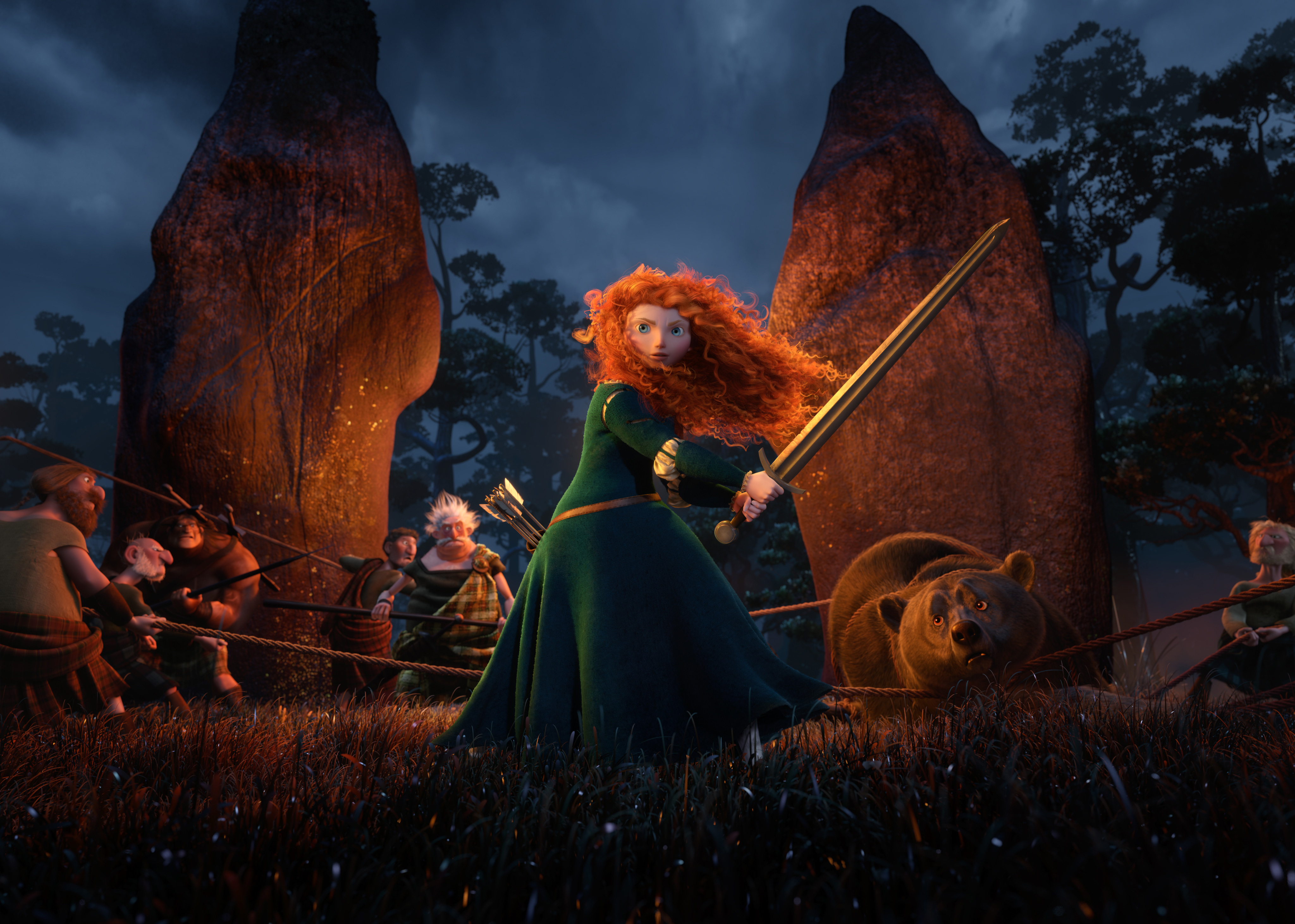
Brave is almost like a "Greatest Hits" movie for Pixar. Everything we've come to expect from some of the finest storytellers and animators in the business is here, along with some new elements to spice things up and raise the bar just a little higher for next time.
It's the story of Merida (a Scottish princess) and her family. This is Pixar's first female heroine, and they do a fine job of spinning a new and exciting sort of story around her. Merida's father is a formidable warrior, the King of four allied Scottish clans, and her mother a loyal, loving, and very stubborn wife. She's intent on teaching Merida how to be a proper Scottish princess, and we quickly learn why. The time has come for the four clans to gather together in the service of finding a suitable husband for the princess, and the princess needs to be ready herself. Merida, a fiery redhead with a personality to match and the growing spirit of a warrior, is less than keen on the idea. That's where the real story begins.
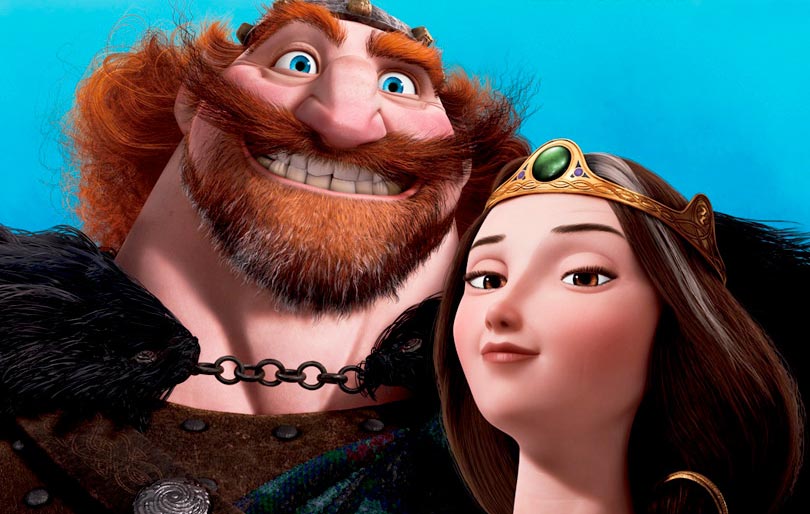
At its heart, Brave is the story of a girl and her mother. Through the magic of storytelling, it's also a story that's accessible to anyone and everyone. Being a 21-year old college guy, you might think this is the last movie I'd enjoy - but you'd be wrong. The relationship between Merida and her mother is one that anyone can identify with, because it's all about the nature of growing up, trying to form your own identity and making choices with consequences you can't always fully foresee. Granted, most stories of growing up don't see the parental figure in question turned into a bear, but still.
Brave's strength as a film stems from the fact that it's a personal movie. For all the action, adventure, and outlandish happenings, the true focus of the story is never forgotten or set aside for anything. Everything matters. For a discerning viewer, the message and direction of the film may be fairly obvious, but that doesn't make the ride any less enjoyable or touching.

In the end, Merida doesn't find her prince and ride off with him into the sunset. She doesn't need to. And I think that's a wonderful thing. I'm not a young woman, so I'm not going to pretend I can fit in one's shoes (the heels would hurt my ankles, probably), but I can say this. Sending a message that you can be your own strength, that everyone is capable of being strong in their own way, and that perhaps one of the greatest strengths you can have is to understand and accept the strengths of others, is something to be truly admired. It's a rare thing to find in this age of rom-coms and Twilight movies, but that doesn't make it any less true.
Bonus Prize: As a reward for reading all the way to the end of my review, here's a link to some of Pixar's "Story Rules" to live by. It's a great read!
Sunday, June 24, 2012
DVD Review: 21 Jump Street
In recent years, Hollywood seems to have been running short on original ideas. The glut of cash-cow remakes and "re-imaginings" of old properties, more often than not, is an excuse to make a lazy movie with name recognition and nothing else going for it. I thought that 21 Jump Street would be one of those movies. I was wrong.


Most people today only know of the television show 21 Jump Street as the starting point for a young Johnny Depp's career. I'm one of them. I've never seen an episode of the original series, but honestly, the conceit is exceptionally simple. Jump Street was (and is) about cops who are relegated to a small division whose job it is to go undercover as high school students. In the film, Channing Tatum and Jonah Hill play two young, inexperienced cops who were anything but friends in high school - Tatum's character was a cool jock, while Hill was a nerd.
The film plays well both as a spin on the traditional buddy-cop comedy and as a sly commentary on everything it portrays. The really great thing about Jump Street, besides the smart, tight script, is how self-aware and self-deprecating it can be. When the main characters are reassigned to Jump Street after bungling their first arrest, their captain describes the place as having been dreamt up by a bunch of people who have no original ideas and so have resorted to dusting off old programs from the 80's. Thinly veiled commentary? Sure. But it works. And it is funny.
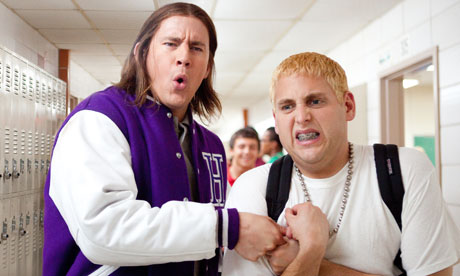
This movie stands on its own two legs in all respects. Is it perfect? No, but it sure is hilarious. I fully admit, I tend to shy away from a lot of contemporary Hollywood comedies, because I usually find them needlessly crass and painfully unfunny. That's just a personal feeling, and its one of the things that kept me from paying to see this movie in theaters. Jump Street subverted my expectations entirely in that regard.
Watching the main characters return to high school and be totally blindsided by how the definition of 'cool' has changed in just a few years (Hill's character becomes 'cool', while Tatum's jock is suddenly 'lame'), is fantastic. The role reversal makes for some genuinely interesting (if slightly shallow) character development. The rest of the movie is purely knock-down, drag-out fun. Realistic? Absolutely not. Most of the things these guys do in service of solving their case are so illegal it shouldn't even be funny. But it is. I kind of want to make my college roommate (who is majoring in Criminal Justice and wants to become a cop) watch this so I can see his head explode over just how out there it is. Still, it works on all kinds of levels.
Johnny Depp does have a cameo in this movie, and let me say, it is fantastic. It fits perfectly with the story and doesn't feel shoehorned in. Plus, its the most badass (and funny) Depp has been in years. I would pay to see an entire movie featuring his character in this film if it was done right.
If you haven't seen it yet, this movie is well-worth the price of a rental. Fun, engaging, and plain old enjoyable. Check it out.
Saturday, June 23, 2012
Happy Birthday Joss Whedon!

Whedon is a huge inspiration to me as a writer, creator, and director. There are others, of course, but he ranks at the top of my list for sheer dedication and creative energy. I mean, the guy tried to take a two-week vacation, and wound up making a movie version of Shakespeare's Much Ado About Nothing in his backyard. Dedication to his craft? For sure. But more importantly, I think that 'vacation story' sums up what makes Joss such an admired figure for people like me. He didn't shoot Much Ado because he was hoping to make money off it. He shot it because telling stories is what he loves to do. You can be dedicated to something without truly loving it, but that's not Joss. The man loves what he does as much as the fans of his work do - and that's truly admirable.
So in appreciation of Joss' 48th birthday, let us all do THE DANCE OF JOY AND HONOR.
Or, if you're not much of a dancer, show your support of Whedon by going out and purchasing one of his works - for example, the DVD of Doctor Horrible's Sing-Along Blog, featuring Neil Patrick Harris...

or the many works about him, the most recent of which is Joss Whedon: The Complete Companion, featuring an essay by yours truly.

Happy Birthday, Joss. And thank you.
Where's the Rock?
I wanted to love Rock of Ages. I really, genuinely did. I am an unabashed lover of rock'n'roll music, and for me, theater is a way of life. To see the two combined onscreen was a dream come true - at least in concept. In delivery, not so much. What really disappoints about Rock of Ages is that in the maelstrom of misfires, there are some genuine rock'n'roll moments, some flashes of what the whole film could and should have been all about.

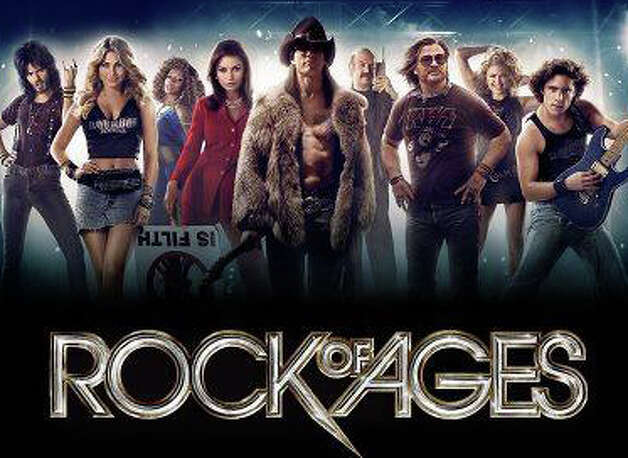
There's a saying that'll be familiar to anyone who works in and/or enjoys musical theater: when you have something to say, you speak. When you can't speak, you sing. Musicals are all about that chance to express things that we can't find the words to otherwise. In Rock of Ages, the vast majority of the characters have little or nothing to say, which makes their singing, in a word...pointless. Because many of these characters are so shallowly drawn (and frankly, unlikable caricatures), their singing lacks the raw, explosive emotional power that sits at the center of any good musical. Musicals are built around just that - the music, as extension of character and story. When both of these elements are as flimsy as they are here, it undercuts the music.
Like me, you may have heard or read that the real reason to see this movie is Tom Cruise's turn as the Axl Rose-inspired rocker Stacee Jaxx. That's genuinely true. Jaxx has an odd obsession with feeling other people's heartbeats (these people are almost exclusively women), but what's interesting is that he alone is the heartbeat of this film. Why? Simple. Stacee Jaxx is the only real piece of genuine rock'n'roll in the entire movie. Every time he's onscreen, a wild energy comes with him that invigorates an otherwise furiously dull film.
Other performers in the film can sing and dance perfectly well, for sure. One thing this movie isn't short on is talented, pretty people. Julianne Hough in particular gives a game performance and supplies great vocals.
Unfortunately there's not all that much here for the performers to work with. The movie is set in 1987, and for some counter-intuitive reason, it seems more interested in chronicling the decline of rock'n'roll than celebrating the fact that it will never die. Watching Rock of Ages will just make you want to come home and blast your favorite vinyl record on the turntable. But that's really not so bad, is it?
Sunday, June 17, 2012
The Majesty of the Doctor
I don’t know why I keep watching this clip. It makes me cry like a baby every single time. The brilliance of Murray Gold’s score combined with the regeneration scenes of every Doctor are unbelievably powerful.
But what hits me the most about this clip is the roars that go up from the crowd as each Doctor’s face appears on the screen. You can tell how much people really love The Doctor and how important he’s been to them - in all 11 incarnations, to millions of people over nearly half a century, in so many different ways.
As a writer, as a creator, I find myself wishing that someday, I might be able to create even just one thing - one story, one character, one anything - that has an impact on even just one person the way that the Doctor has mattered to so many people.
At first this idea seemed selfish to me…but then I realized, it isn’t. I don’t need the fame, the glory, the money that might come from it. I just need to create something that matters to someone else the way that the Doctor matters to me. He is a hero of mine and I look up to him, and I’ll never apologize for that. Maybe someday, if I’m lucky, someone will look, even just for a moment, to someone I’ve written the way I look to the Doctor now.
Allonsy, everyone.
Tuesday, June 12, 2012
Shameless Plugs (An Addendum)
In the spirit of my last post, and because I think they deserve it, I thought it would be a good idea to post links to some of the dedicated writers and artists I mentioned when writing about GraniteCon. If you have a chance, check out their sites and show them some love - metaphorically (or literally in the form of purchasing their work).
Juli Mayers (Wicked Little Studio): Not only is Juli a genuine, friendly person, she's also a great artist. I have a print of hers (the 9th Doctor and Rose) hanging in my room right now. You can find her at: http://www.wickedlittlestudio.com/
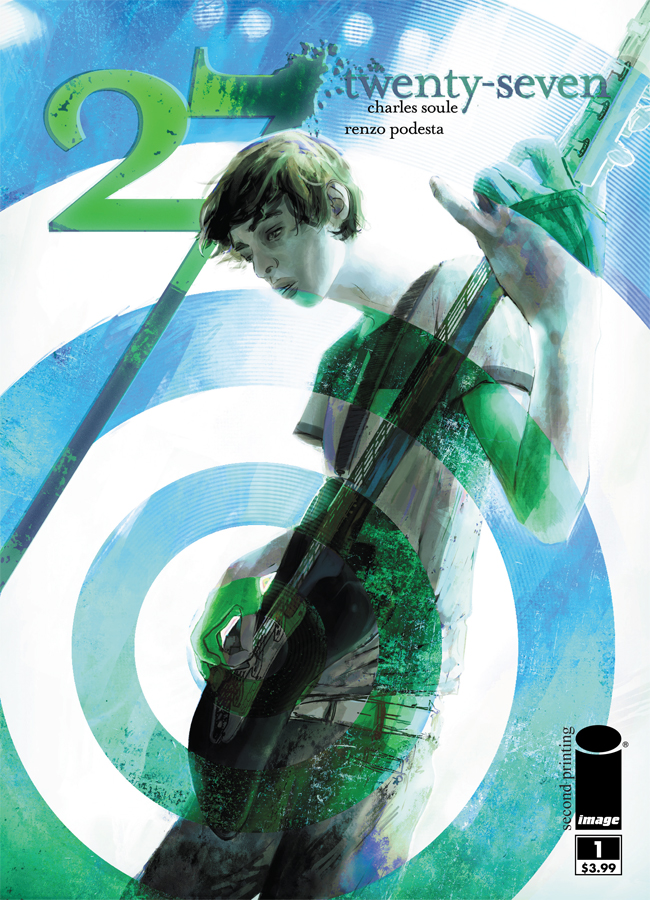
Charles Soule: Writer of 27 and Strongman, as well as the upcoming Strange Attractors, Charles is based in New York. I'm reading the first volume of Strongman right now, and it's very, very good. And I'm not saying that just because I met the guy. Give his work a read - you can find him at: http://charlessoule.wordpress.com/
Peter Vinton Jr. : This guy is an artist and illustrator, and his work ranges from covers to sequential art to portraits. Check him out at: http://petervintonjr.com/index.html
Joe Hill: Of all the folks on this list, he's probably the one least in need of what (little) help might come from a mention on this blog. The son of writer Stephen King, Mr. Hill is the author of the Locke and Key comic book series, which is ongoing, as well as the novels Horns and Heart Shaped Box. He is also the author of the superb short story collection 20th Century Ghosts. If you don't have a copy, do yourself a favor and get one as soon as you can. You'll be glad you did.
You can find him at: http://joehillfiction.com/
Monday, June 11, 2012
GraniteCon, Comics Writing, and the Creative Community

I got to reconnect with a few new friends and fellow geeks, including the talented Juli Mayers of Wicked Little Studio, who I first met on Free Comic Book Day and who puts out some really great work. I collected some great new prints and a commissioned sketch as well.
In addition to that, I attended a comic book writers panel featuring several writers, including:
- Joe Hill, author of Locke and Key in the comicsverse, as well as the novel Heart Shaped Box and the phenomenal short story collection 20th Century Ghosts.
- Jason Ciaramella, writer of Joe Hill's The Cape and the upcoming The Cape: 1969
- Charles Soule, writer of 27 and Strongman, among other titles.
- Mike Raicht, creator and writer, The Stuff of Legend
Of course, if you'd rather, you could ignore all that and just go with Joe Hill's idea, which was: get a giant Deadpool tattoo on your chest, then go to a con where you can meet Jim Lee, then rip your shirt open and demand a job from him. Of course, as Ciaramella said, Lee and the other folks over at DC would probably not take kindly to that - for more than one reason.
 |
| Because Deadpool, as we all know, is a flagship DC Comics character. Along with Spiderman and The Avengers. |
When I came back, he said, "Hey, you made it back. You're a man of your word." All I could think to say was, well, the truth: I hope that someone would do the same thing if I was in his position. That hope was only strengthened by what he told me next. He said, at every con, there were people who did that -said they were coming back and then never did. He said it was "heartbreaking", every time. You might not think it would be, but it is.
Thinking about that exchange today, I've come to a better understanding than ever before of how important it is for us creative types to support each other. I mean, living the creative life is hard enough anyway, so why not try to make it a little easier on each other? That's part of what events like GraniteCon are for, to take the opportunity, as writers and artists of all stripes, to come together and buoy each other up a bit. Money might not be the easiest thing in the world to come by, but where can it be better spent than in helping another artist out?
Now I know I'm no authority on the subject of money being tight, and I don't have the metaphorical soapbox of a starving artist to be writing this post from. I'm still a college student, lucky enough to be comfortable and have the support of his parents. But someday, all that comfort might not be there. Successful or not, well-known or not, I still think that the thing I as a writer will value the most is the appreciation and honesty of an audience, large or small. So to the writers and artists and everyone else reading this, take that chance. Buy a book by an up-and-coming writer. Pay the $10 for a commission sketch at a con. Instead of a mass-produced poster for your wall, buy a large print from an artist you know. And when someone asks you where it came from, tell them. Spread the word, and help each other out. Who knows, maybe someone will do the same for you.
Subscribe to:
Posts (Atom)